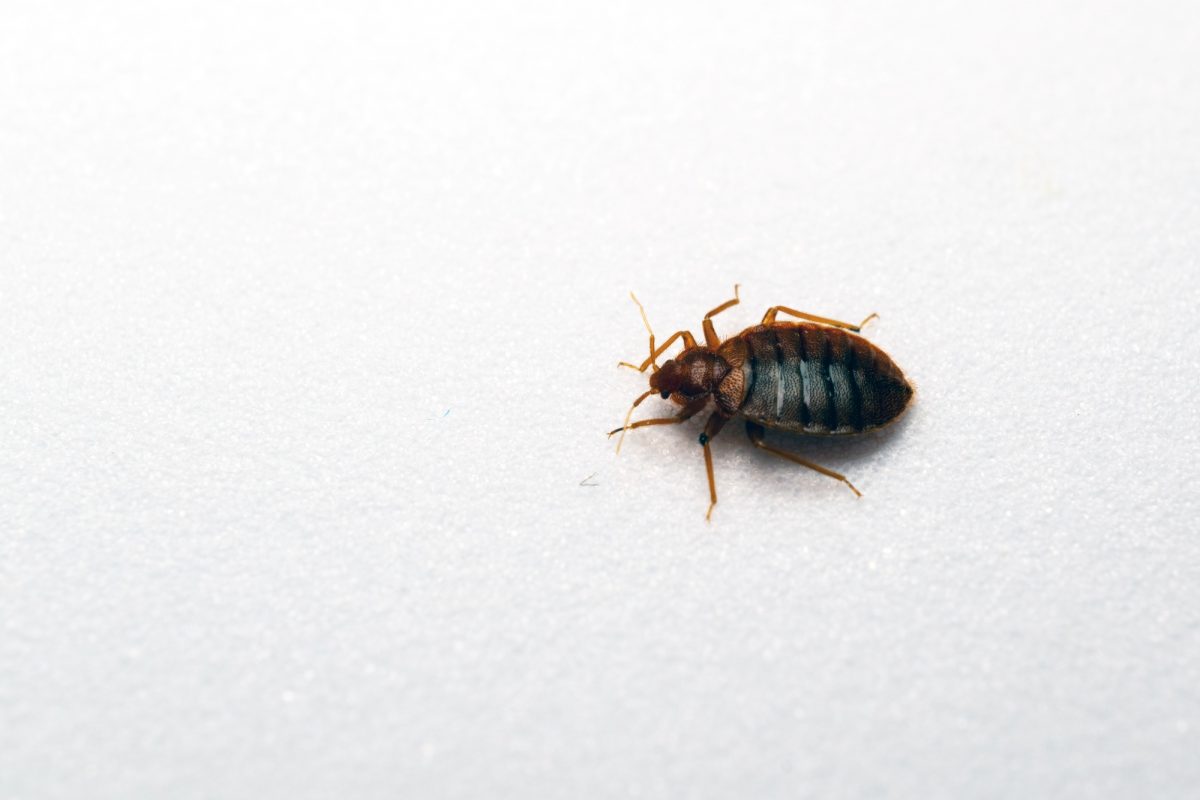
Warm temperatures accelerate the development of bed bugs, but these parasites are truly tenacious: even in cold climates, they manage to survive thanks to the microclimate that forms inside buildings. Bed bugs go through 3 stages of development: they hatch from eggs, transform into nymphs (or neanids), and finally become adults. Under favorable conditions, just one sexually mature pair is enough to reproduce and infest a room at an astonishing rate. To continue mating and producing eggs, both males and females must feed at least once every 14 days. Females are able to lay up to 5 eggs a day (and about 200-300 eggs in the course of their life, on average 9-12 months, although with age the number of viable eggs laid undergoes a decline) of white color, covered with a sticky substance, which generally hatch in warm environments about 7-10 days after laying with a temperature around 20°C (after 4-5 days at 35°C).
Bed bug eggs require a relatively stable temperature between 13°C and 37°C to develop; temperatures above or below these values inhibit hatching and cause the death of the embryo within a maximum period of three months. Under optimal conditions, egg mortality is low and about 97% of bed bug eggs hatch successfully. The eggs hatch within 6-9 days, giving life to immature bed bugs, called nymphs, which are translucent straw-colored and very small in size (about 1 or 2 mm), making them difficult to detect. After having their first blood meal, the nymphs’ bodies grow and become darker in color, going through 5 stages of development (nymphal stages) marked by as many molts and at least one meal for each stage.
The transition from nymph to adult specimen depends on the ambient temperature, food availability and, to a lesser extent, humidity. Under ideal conditions (temperature around 30°C and abundant food availability), the complete life cycle from egg to adult can be less than two months, usually about 6-8 weeks. A few bed bugs can become thousands within 2-3 months.